Quality in management: projects, processes, and risks for delivering value in Tax Administrations
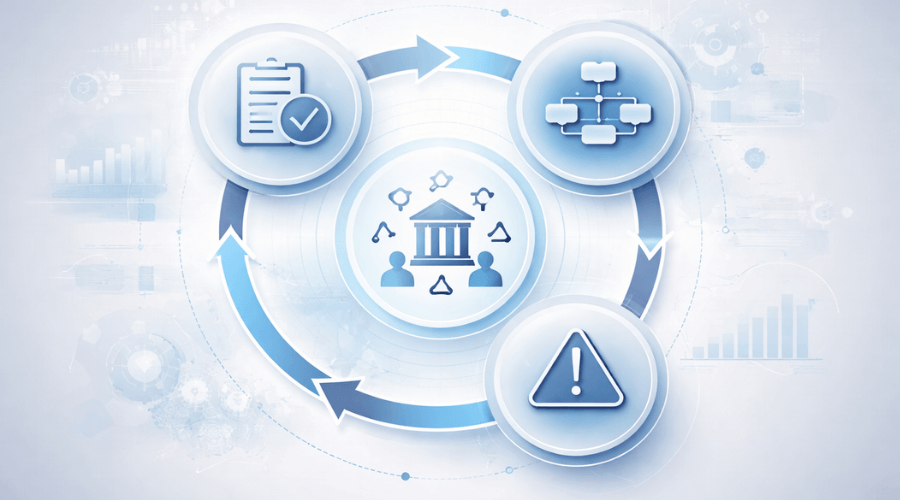
Tax administrations are fundamental for the development of nations and the achievement of the sustainable development goals. Their performance is an infallible driver in obtaining financial resources that are necessary to manage public goods and services. Given their importance in the economic and social system, it is relevant that TA directors promote and implement quality in their management. What do we mean by quality in management? To excellence in operations through the appropriate use of public resources. This is achieved through the set of work frameworks and management models that guide the institution towards total quality. In this article we will explore three key components that require constant strengthening to achieve value delivery: project management, process management, and integrated risk management.
The projects, temporary initiatives in a unique context undertaken to create value (Project Management Institute, 2025), are the catalysts of change and the way to implement the strategy. A large part of the public investment made by the tax administrations is concentrated on projects. Its proper management allows you to achieve effectiveness (doing the right thing) and efficiency (doing it the right way). Thus, the agenda of continuous improvement and investment in capacity building should consider the implementation of formal practices in project management. Where to start? 1. By including certified human capital (credentials such as Project Management Professional or Certified Associate in Project Management); 2. Implementing project portfolio management and project management procedure manuals, both based on the Project Management Institute standards, as cited in Chapter 10 of the CIAT book: “ICT as a Strategic Tool”; and 3. The continuous commitment of the directors to accompany and sponsor strategic projects of the tax administration.
Process management is an indispensable component to achieve quality in management. A process is a sequence of recurring and interrelated steps (activities) that are conducted to provide value to the citizen. The efficient execution of processes (doing them well and with the fewest resources) is linked to tax compliance. This is because automated and integrated processes reduce compliance costs, which makes citizen interaction with the institution more attractive. Although some tax administrations may consider their current maturity to be sufficient, there is still a lot of work to be done. What is the appropriate practice for managing processes? 1. Adopt the criteria of a quality management system (QMS), specifically the guidelines of the ISO 9001:2015 standard; 2. Complement the definitions of the QMS with business process management (BPM); 3. Adhere to Lean principles and practices to the institutional management system to focus on value, in addition to reducing waste; and 4. Adopt, at the managerial level, a mentality of continuous improvement, promoting discipline in the application of the QMS and the incremental achievement of automation projects that deliver constant value over administrative perfection.
The last component that drives quality in management is the integrated risk management. A risk is understood as an uncertain event that, if it occurs, has a positive or negative impact on the institutional objectives (Project Management Institute, 2019) and, more briefly, as the effect of uncertainty on the objectives (International Organization for Standardization, 2018). In the value delivery system of an institution, leveraged by project and process management, correctly managing uncertainty and opportunities favors effectiveness and efficiency. However, professionalizing this area of knowledge is often confused with a deep statistical analysis that generates paralysis by analysis. That is why it is important to rethink the way organizations manage risks, based on their degree of maturity and a pragmatic approach. Thus, we propose: 1. To favor the processes of qualitative risk analysis, a concept based on the judgment of experts (known as the Delphi technique); 2. Integrate into a single process cycle the operational, process and tax compliance risks, under the guidelines of ISO 31000, which, unfortunately, are presented separately; and 3. Integrate risk management into strategic planning, so that it is a visible process for the directors of the institutions.
In conclusion, operational excellence in the public sector is a mandate demanded by citizens’ expectations. That is why managers must constantly invest time and resources in implementing and updating management approaches, such as the LEAN model, backed by current practices for managing projects, processes, and risks.
Bibliographic references
- International Organization for Standardization. (2018). Risk management – Guidelines (ISO Standard No. 31000:2018).
- Project Management Institute. (2025). A guide to the project management body of knowledge (PMBOK guide) (8th ed.).
- Project Management Institute. (2019). Risk management in portfolios, programs, and projects: A practice guide.
2,323 total views, 2 views today