Cartagena de Indias hosted the 2026 Meeting of the CIAT Standing Committee on Ethics
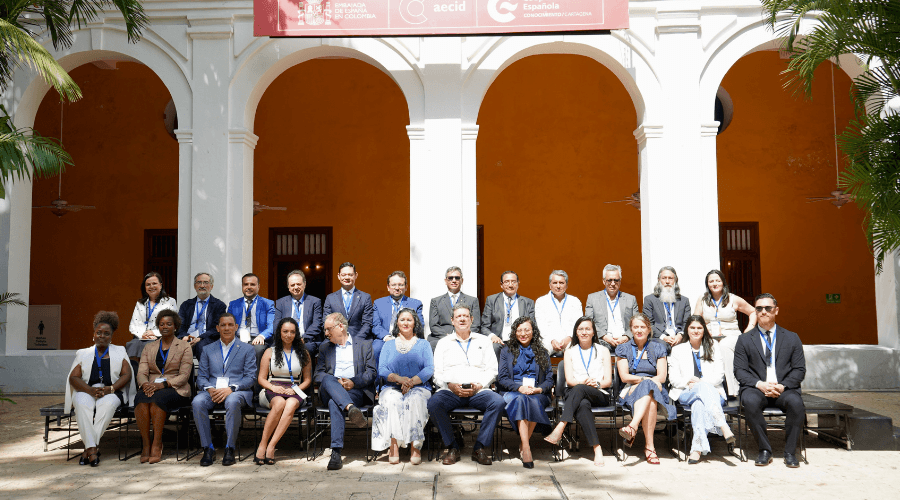
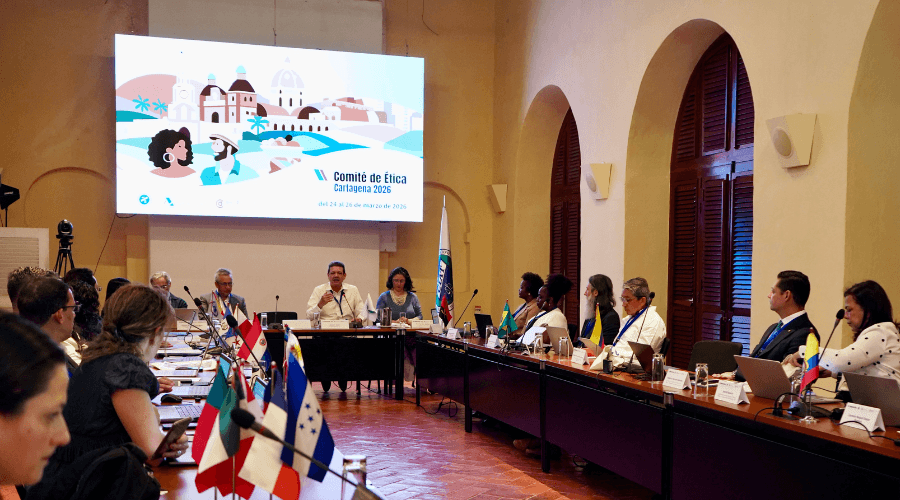
From March 24 to 26, 2026, the Inter-American Center of Tax Administrations (CIAT) held the Meeting of the CIAT Standing Committee on Ethics in Cartagena de Indias, Colombia, establishing a high-level regional forum aimed at strengthening ethics, integrity, and internal control within the tax administrations of Latin America and the Caribbean.
The event was attended by CIAT Executive Secretary Márcio F. Verdi, as well as officials and representatives from Spain’s State Tax Administration Agency (AEAT), the Spanish Agency for International Development Cooperation (AECID), the National Tax and Customs Directorate (DIAN), and the ITRC Agency, who sat on the main panel during the opening ceremony, reaffirming their joint commitment to a regional agenda for public integrity.
During the workshop, the CIAT Internal Control Manual was presented. This technical-institutional document, developed collaboratively, marks the beginning of a new phase of work for the Committee aimed at its adoption, implementation, and strengthening within the region’s tax administrations.
The meeting brought together representatives from numerous countries, who shared progress, challenges, and lessons learned in the areas of ethics, integrity, and internal control, thereby strengthening the exchange of experiences and regional technical cooperation.
The meeting also addressed key initiatives such as the Self-Assessment Guide, national pilot projects, and relevant institutional experiences in transparency, tax education, and tax governance.
The notable participation of international organizations and key stakeholders such as UNODC and Latindadd is also highlighted, broadening the dialogue to include an inter-institutional perspective and international cooperation in the promotion of public ethics.
As a result of the meeting, strategic agreements and lines of action were defined for the 2026–2027 period, including the strengthening of monitoring mechanisms, coordination between national and regional initiatives, and the creation of working groups to develop new instruments such as the CIAT Model Code of Conduct.
At CIAT, we reaffirm our commitment to continue promoting opportunities for technical cooperation that contribute to institutional strengthening, transparency, and public trust in tax administrations.
3,053 total views, 4 views today