
From Santa Marta to the General Ledger: Just Transition and Electronic Invoicing.

The white sands of Santa Marta, Colombia, recently served as the backdrop for a revealing paradox. While more than 50 nations gathered at the international conference on the transition away from fossil fuels to issue a “point of no return” warning, some of the institutions needed to manage this transition—tax authorities—were largely absent. As the echoes of the summit fade, a critical question remains: Can we move from high-level diplomacy to the transactional reality of a decarbonized economy?
While diplomats debate global funding and debt relief, a potential “mechanism” for the transition exists within the digital systems managed by tax administrations around the world, including the 42 member countries of CIAT. To bridge the gap between diplomacy and operational reality, tax administrations can contribute their data to facilitate the transition toward a sustainable and resilient economy.
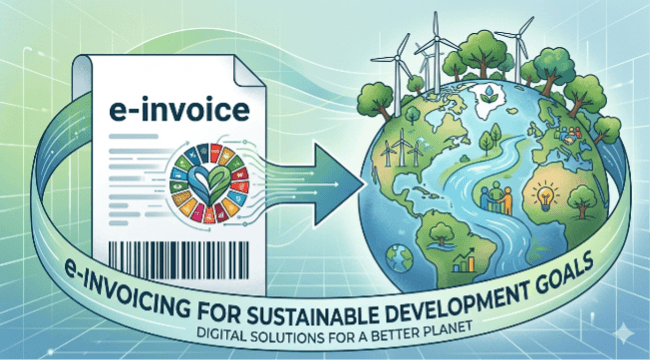
- “Dual Compliance”: Turning Tax Data into a Competitive Advantage In addition to providing vital revenue for governments, an immediate and practical role for tax administrations—within the framework of the EU’s Carbon Border Adjustment Mechanism (CBAM)—is to provide information that enables exporters from Latin America and the Caribbean to demonstrate their environmental footprint, thereby preventing them from facing additional costs resulting from the adjustment or the administrative burden associated with providing such proof
One clear way to streamline this process could be to include standard fields in electronic invoice formats to identify, whenever possible and known, the carbon footprint of each product. This data could be shared with the tax and customs authorities of importing countries, but it would also make it possible to identify locally those companies whose sales have a smaller “footprint” than that reported for their purchases, and which should therefore provide a report on the efforts made to reduce or offset carbon emissions in their processes.
From an international tax center such as CIAT, we could explore the feasibility of this “dual compliance” model. By leveraging existing electronic invoicing standards, tax authorities could capture environmental data at the time of the transaction.
- Protecting the tax base through parametric resilience
All CIAT members face a common threat: the erosion of the tax base, due in part to disasters caused by natural disasters or climate-related phenomena. The destruction of crops and infrastructure, coupled with public health issues stemming from poor air and water quality, strains public finances and reduces revenue. Environmental damage is increasing, putting islands such as Tuvalu and the Maldives, and cities like Jakarta, Bangkok, New Orleans, and Manila at serious risk of being submerged by extreme flooding by 2050.
Tax authorities can contribute to a proactive response through Parametric Resilience. By integrating climate indices (such as rainfall, temperature, or water level thresholds) with tax data, authorities can provide data to policymakers for potential relief measures in the form of more widespread parametric insurance. This “technical shield” would ensure that essential sectors receive immediate support following a disaster, preserving long-term economic viability through data-driven precision.
- Improve transparency in the energy transition
The main theme of the Santa Marta Conference highlighted the complex challenge of managing the phase-out of fossil fuels. For tax authorities, this represents a massive technical and data challenge. Currently, subsidies and tax credits for fossil fuel consumption exceed the amounts of carbon pricing and environmental taxation in many countries, with the exception of countries such as Sweden, Costa Rica, and Switzerland. In 2024, explicit fossil fuel subsidies worldwide (direct public spending and price caps) totaled $725 billion. In contrast, revenue from carbon pricing—derived from carbon taxes and emissions trading systems (ETS) exceeded $100 billion, thus remaining far behind the fossil fuels subsidies.[i]
To manage a “Just Transition,” governments require a high level of transactional transparency. Modern electronic invoicing systems could facilitate the traceability of energy flows and the final destination of tax incentives. This approach allows decision-makers to see exactly where resources are flowing, ensuring that any transition—regardless of the energy mix each country chooses—is managed with fiscal integrity and equity for the population.
Systems such as Brazil’s MDF-e (Electronic Manifest) and Mexico’s Complemento Carta Porte have demonstrated that it is possible to digitalize every movement of goods, highlighting the capabilities of continuous transaction monitoring systems by linking data reporting to each individual transaction and reducing the need for complex and costly end-of-period compliance reports.
A possible way forward: A common model for climate-friendly taxation
The technical complexity of Brazil and Mexico’s systems can be daunting for smaller governments with limited IT budgets. However, there may be options available for smaller governments, such as the electronic invoice reception software for small jurisdictions developed by CIAT.
Instead of creating a new system, the next step could involve enabling standardized XML field options for environmental data within existing electronic invoicing systems—which could be referred to, in conceptual terms, as “green” electronic invoicing. The identification of data elements and standards would be common to all jurisdictions, which would then need to adapt them to their national formats.
By adopting a shared model, smaller nations can maintain their competitiveness, moving the region toward a harmonized fiscal-environmental bloc. In the digital age, the real “missing link” is data standardization.
Conclusion: Reconciling the Ledger with the Planet
As momentum shifts from Santa Marta to the upcoming summit in Tuvalu, the role of tax technology cannot be ignored. The transition is not just about treaties; it is about the data flowing through the digital world. By aligning our technical standards with these global realities, we protect our economies and ensure a sustainable future.
Technical Focus: Fiscal Infrastructure as a Green Tool
Brazil: The NF3-e Model
The Electronic Electricity Invoice (NF3-e) is a mandatory XML-based electronic invoice for electricity. Its structure allows for the direct integration of consumption data. By linking these XML fields to the regional grid’s carbon intensity factors, tax systems can automate the tracking of Scope 2 emissions for all companies in the country.
Mexico: The Carta Porte Supplement
Mexico’s Carta Porte 3.0 is a mandatory digital document for goods in transit. It captures detailed data on modes of transport, routes, and fuel types. This tax requirement provides the accurate “primary data” needed for exporters to comply with international carbon tracking standards without having to submit reports
Tax standards for climate integration: Schema integration (Modular implementation for small administrations):
- • Phase I: The Logistics Tag: An XML field for fuel type and estimated distance (inspired by the MDF-e).
- • Phase II: Energy Synchronization: A simplified interface for utility bills (inspired by NF3-e) to track business energy efficiency.
- • Phase III: The CBAM Bridge: An automated mapping of local product codes to international carbon intensity categories
References
- • CIAT (2023). Priorities and Key Features of the Green Tax Agenda.
- • European Commission. Carbon Border Adjustment Mechanism (CBAM): Implementation Guide.
- • OECD (2022). Pricing of greenhouse gas emissions.
- • Treaty on the Non-Proliferation of Fossil Fuels (2024). The Santa Marta Declaration.
[i] https://www.imf.org/en/topics/climate-change/energy-subsidies Explicit global fossil fuel subsidies reached $725 billion in 2024, significantly outpacing the record $107 billion in revenue generated from carbon pricing, according to data from the International Monetary Fund and the World Bank. These figures underscore the ongoing challenges in fiscal policy and environmental taxation, as subsidies continue to exceed carbon pricing mechanisms.
2,432 total views, 8 views today